
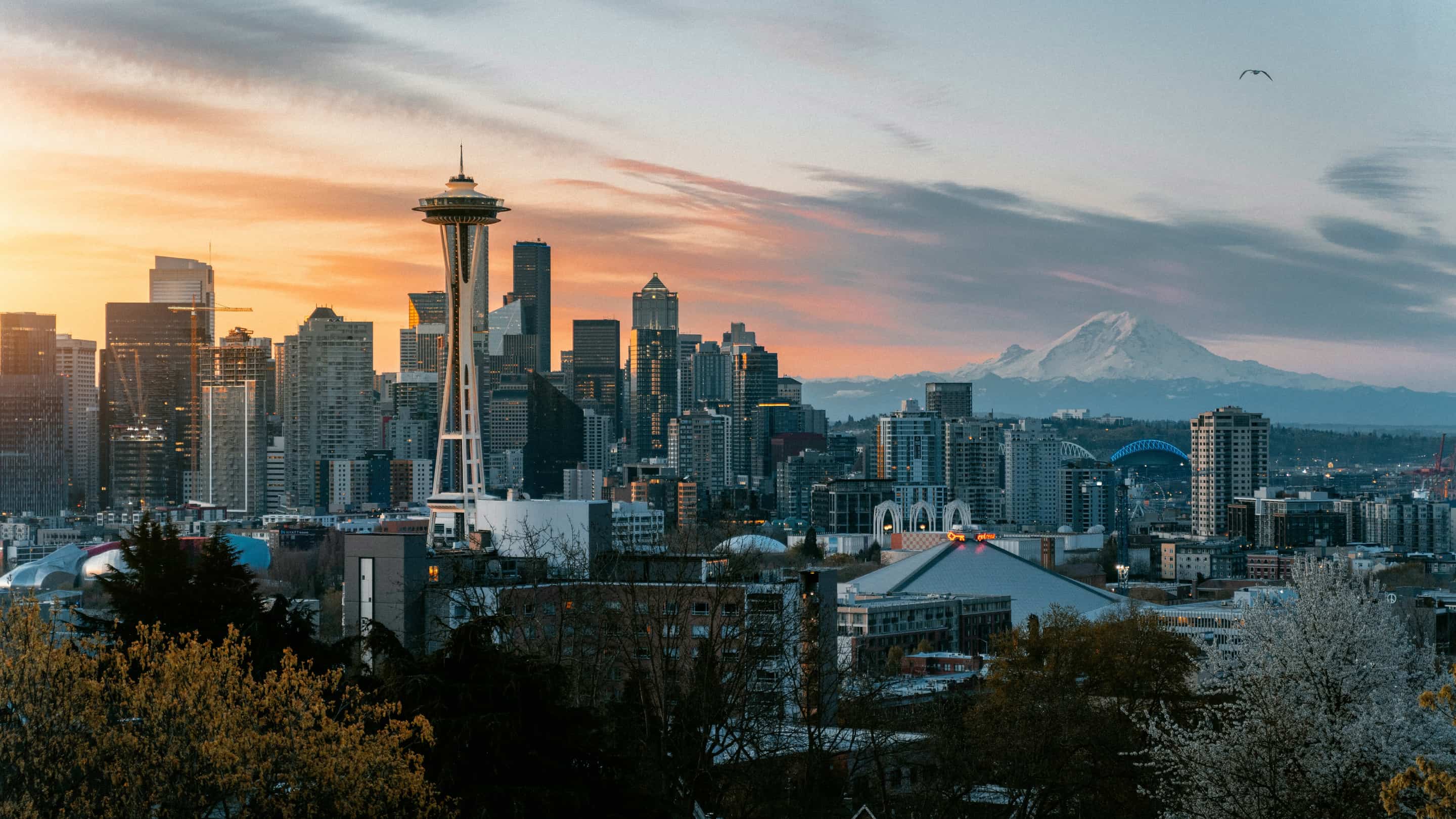
If you're a corporate travel manager, an event agency, or the person quietly handed "the Seattle piece" of a global sponsor activation, you already know the part nobody thanks you for: the transportation. When the hotel-to-venue move works, no one remembers it happened. When it doesn't — when a 4-hour Champions Club window gets chewed through by a vehicle that showed up at standard gate-open time — it becomes the only thing anyone remembers about the day. This post is a working framework for planning that layer across the six FIFA World Cup 2026 matches at Lumen Field.
A note on what Buslane is and isn't. We're a Seattle-based charter marketplace that matches groups to local operators with the right vehicle class and driver experience for the job. We don't own the vehicles, we're not FIFA's hospitality logistics partner, and we're not part of any Venue Series package. What we do: scope the engagement properly and keep the handoffs from falling between the cracks.
Who buys this service
The audience clusters around a few familiar profiles.
- Sponsor hospitality groups — brands bringing clients, partners, and internal teams to one or more matches as part of a broader activation.
- Client entertainment coordinators — consulting firms, banks, law firms, and enterprise sales teams hosting top accounts.
- Executive delegations — C-suite, board, or key-account groups where the transport itself is part of the signal the company is sending.
- Hospitality package holders — groups of 10 to 60 holding FIFA Venue Series tickets (Pitchside Lounge, VIP, Trophy Lounge, Champions Club, or FIFA Pavilion) who have handled tickets through FIFA's channel but still need ground transport organised separately.
Some readers will hold those FIFA-channel packages, many won't. The operational logic below applies regardless — the Venue Series tiers are a useful reference point because their differing entry times drive schedule decisions, not because Buslane is part of that programme.
Vehicle classes that fit corporate work
Three vehicle classes carry most corporate work in Seattle. Buslane matches groups to operators who specialise in premium fleet; the capabilities below describe what those partner operators typically offer.
- 14-passenger executive Sprinter van. The default for executive delegations of 6 to 12. Upmarket interior, reclining captain's chairs, USB charging, tinted windows. Small enough to handle downtown Seattle streets without staging problems.
- 24-passenger executive minibus. Right for a sponsor's client group of 15 to 22. Keeps the group together in one vehicle, compact enough that Lumen Field drop-off is straightforward.
- 56-passenger premium coach. For larger hospitality groups — extended client entertainment, multi-company activations, or full suites of 30 to 56. At that size, a single vehicle protects continuity better than two mid-size vehicles in parallel.
Multi-stop itineraries
A corporate hospitality day is rarely hotel-to-stadium and back. The typical shape: hotel pickup → lunch or private reception → Lumen Field drop-off → post-match reception venue → hotel return. An airport transfer often anchors one or both ends of the day.
Multi-stop work needs an itinerary written down, shared with the operator, and validated against the real Seattle geography before it's confirmed. Dwell times, driver hours-of-service limits, and the specific drop-off curb each venue expects are all things that quietly fail when the plan is only in someone's head. For the stadium piece specifically, Lumen Field logistics has the venue-level detail.
Multi-match engagements
Corporate hospitality buyers often hold tickets to more than one Seattle match. Where that's the case, we strongly prefer to quote a multi-match engagement with the same vehicle and, where possible, the same driver across the tournament. Two reasons: continuity (the driver learns your itinerary preferences and how the group moves) and fleet security (premium vehicles are finite, and a block booking locks down the asset for the full window rather than making you re-compete for it each match day).
Discretion and privacy
Premium fleet typically runs tinted rear windows as standard. Manifests are handled on a need-to-know basis — the driver gets the itinerary and a principal count, not a guest list with titles. Dispatch for sensitive engagements moves through a named account manager, not a shared inbox.
Worth being explicit: this is operational discretion. It is not executive protection, close-protection, or a security service. If your group needs protective detail, that's a specialist line of work we can coordinate alongside transport but don't provide directly.
Branded signage
Occasionally a sponsor asks for a magnetic vehicle sign — a company logo, event name, or welcome message — on the coach or Sprinter. This is case-by-case with the operator, requires artwork supplied in advance, and needs two to three weeks of lead time in practice. Not every operator accommodates it. Flag the request when you first scope the engagement, not a week out.
Aligning with FIFA package entry times
This is the single most common place a standard-time transport plan falls apart on a corporate job. FIFA Venue Series packages have tiered entry times — Champions Club and upper-tier packages open earliest (as much as four hours pre-kickoff for pre-match hospitality), while standard transport plans assume a 90-minute or 2-hour arrival window. If your group holds Champions Club tickets and the vehicle is booked to the standard gate-open window, you've handed an hour of paid-for hospitality back to the kerbside.
The fix is simple but has to be done explicitly: confirm your tier's entry time with whoever holds the hospitality relationship, and pass that into the transport brief as the arrival target. For further context, see Corporate hospitality transport.
Pricing framing
We don't publish match-day rate cards. Premium work is quoted per engagement based on vehicle class, itinerary complexity, number of match days, and staging requirements. A same-day Sprinter shuttle prices very differently from a three-match block booking with overnight driver staging. Send the itinerary and group size, and the quote comes back against the actual shape of the work.
Booking lead time
Premium fleet goes first. The operators we trust for Champions Club, VIP, Trophy Lounge, and FIFA Pavilion groups are already taking tournament bookings. Six weeks out is a normal working window; inside 30 days, options narrow to whatever's left — which in Seattle for June 2026 will be thin. If the hospitality tickets are confirmed, there's no reason to delay the transport conversation.
Frequently Asked Questions
What's the right vehicle for a corporate hospitality group of 20?
A 24-passenger executive minibus, almost always. It keeps the group in a single vehicle, handles Seattle drop-off kerbs without staging friction, and carries the interior standard that a corporate client expects. Two Sprinters can work if the group needs to split between venues, but default to the single minibus.
Can our driver wait during a multi-hour post-match reception?
Yes — a wait-and-return is the normal pattern for corporate work and is scoped into the engagement up front. We quote it against driver hours-of-service rules so the same vehicle and driver can complete the full loop without a shift handover in the middle of your evening.
Do you coordinate with the FIFA Hospitality Finder tier our group holds?
We don't have a commercial relationship with FIFA's hospitality programme, and we're not part of any Venue Series package. What we do is take your tier's entry time as a hard input to the transport plan. Send us the confirmation email or the tier name, and we'll build the arrival window around it.
How far in advance should a corporate group book premium transport?
Six weeks is comfortable for single-match corporate work in Seattle during the tournament. For multi-match engagements or groups above 30 passengers, eight to ten weeks is better. Inside 30 days out, availability on premium fleet specifically becomes unpredictable.
Can the same bus handle airport, hotel, and match-day transport for the full tournament?
In most cases yes, and it's the pattern we recommend for multi-match engagements. A single block booking covers airport transfers, hotel shuttles, and match-day movements with the same operator — same driver where hours-of-service rules allow. Simpler invoicing, and continuity is the real value.
Ready to scope the engagement
If you're running a corporate hospitality programme through Seattle in June 2026, the earlier we see the itinerary, the better the options on premium fleet. See corporate hospitality transport for commercial detail, or Lumen Field and Seattle for venue and city context. When you're ready, start a quote.